 Pin it
 There's something about the smell of lemon zest hitting a hot pan that makes me feel like I've traveled somewhere bright, even on the gloomiest days. Years ago, a friend brought a slice of pound cake to a rainy afternoon gathering, and I watched everyone's faces light up the moment they tasted it—that sharp, buttery lemon brightness cutting through the heavy mood like sunshine. I've made this cake dozens of times since, and it never fails to be the thing people ask for by name. The magic is in keeping it simple: good butter, fresh lemons, and the patience to not rush the mixing. It's become my go-to when I need something reliable, elegant, and honestly, a little bit of edible comfort.
I made this cake for my neighbor's book club last spring, and she asked me to leave the recipe written down on a card. Two months later, she told me she'd made it four times and it had become her signature dessert. That moment—when something you've baked becomes woven into someone else's kitchen routine—that's when you know a recipe is worth keeping.
Ingredients
- Unsalted butter (1 cup/225 g), softened: This is your cake's foundation—room temperature butter creams into the sugar smoothly, trapping air that makes the cake rise and stay tender. Cold butter won't incorporate properly, and you'll miss that fluffy texture.
- Granulated sugar (2 cups/400 g): Don't skimp or substitute—this amount creates the right crumb structure and helps the butter emulsify evenly.
- Eggs (4 large), at room temperature: Cold eggs don't blend as smoothly and can make the batter look curdled. Set them on the counter for 15 minutes before starting.
- Whole milk (1/4 cup/60 ml): This keeps the cake moist and tender; the acid in the lemon juice starts to react with the milk, creating subtle lift.
- Fresh lemon juice (1/4 cup/60 ml): Bottled juice works in a pinch, but fresh lemons give you a cleaner, brighter flavor that makes the whole difference.
- Lemon zest (2 tablespoons, finely grated): This is where the personality lives—zest captures the aromatic oils that juice alone can't deliver. Use a microplane for the finest texture.
- All-purpose flour (2 1/2 cups/315 g): Measure by spooning into the cup and leveling; don't scoop directly from the bag, which packs the flour and makes the cake dense.
- Baking powder (1 teaspoon): This lifts the cake gently; it's not a dramatic rise, but a steady, even one.
- Salt (1/2 teaspoon): Even in a sweet cake, salt amplifies the lemon and prevents the sweetness from feeling flat.
- Powdered sugar (1 cup/120 g), sifted: Sifting removes lumps and lets the glaze coat smoothly and evenly.
- Fresh lemon juice for glaze (2–3 tablespoons): Start with 2, then add more if you like the glaze thinner and more pourable.
Tired of Takeout? 🥡
Get 10 meals you can make faster than delivery arrives. Seriously.
One email. No spam. Unsubscribe anytime.
Instructions
- Set yourself up:
- Preheat your oven to 350°F and grease your loaf pan thoroughly—I use a pastry brush and melted butter, then a light flour dusting. If you have parchment paper, line the pan; it makes turning the cake out foolproof.
- Cream the butter and sugar:
- In your mixing bowl, beat the softened butter and sugar together for 3–4 minutes until the mixture looks pale, fluffy, and almost mousse-like. This isn't just about combining—you're aerating, building the structure that gives pound cake its tender crumb. Listen for the mixer to quiet down; that's when you know it's ready.
- Add eggs one at a time:
- Drop in one egg, beat until it disappears completely into the butter mixture, then add the next. This slow incorporation keeps the batter emulsified and silky. If it looks slightly curdled after an egg or two, don't panic—it smooths out.
- Prepare your wet and dry components:
- Whisk the milk, fresh lemon juice, and lemon zest together in one bowl; in another, whisk the flour, baking powder, and salt. Having everything ready means you won't overwork the batter by hunting for ingredients.
- Combine without overmixing:
- With the mixer on low, add one-third of the flour mixture, then one-third of the lemon-milk mixture, then another third of flour. End with the final third of flour. Stop as soon as the streaks of flour disappear—overmixing activates gluten and makes the cake tough.
- Pour and bake:
- Transfer the batter to your prepared pan, smooth the top with a spatula, and slide it into the oven. After 50–55 minutes, insert a toothpick in the center—it should come out clean or with just a few moist crumbs clinging to it.
- Cool with intention:
- Let the cake rest in the pan for exactly 10 minutes—this firms up the crumb so it doesn't fall apart when you turn it out. Then flip it onto a wire rack and let it cool completely before glazing; a warm cake will melt the glaze and make it look streaky.
- Make the glaze:
- Sift the powdered sugar into a bowl, add 2 tablespoons of fresh lemon juice, and whisk until smooth. If it's too thick, add more juice, a teaspoon at a time, until it reaches a pourable consistency that still holds its shape.
- Finish with glaze:
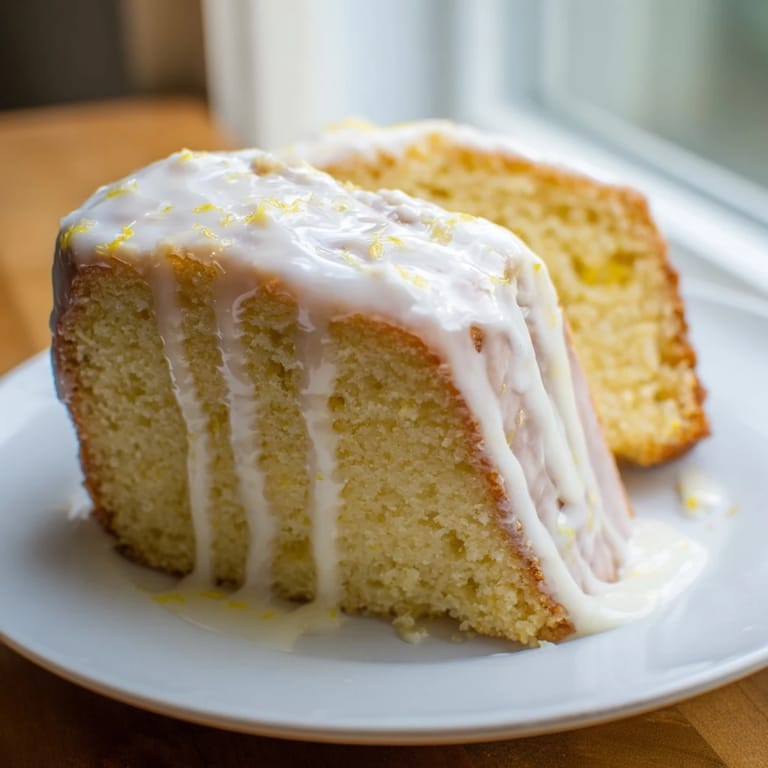
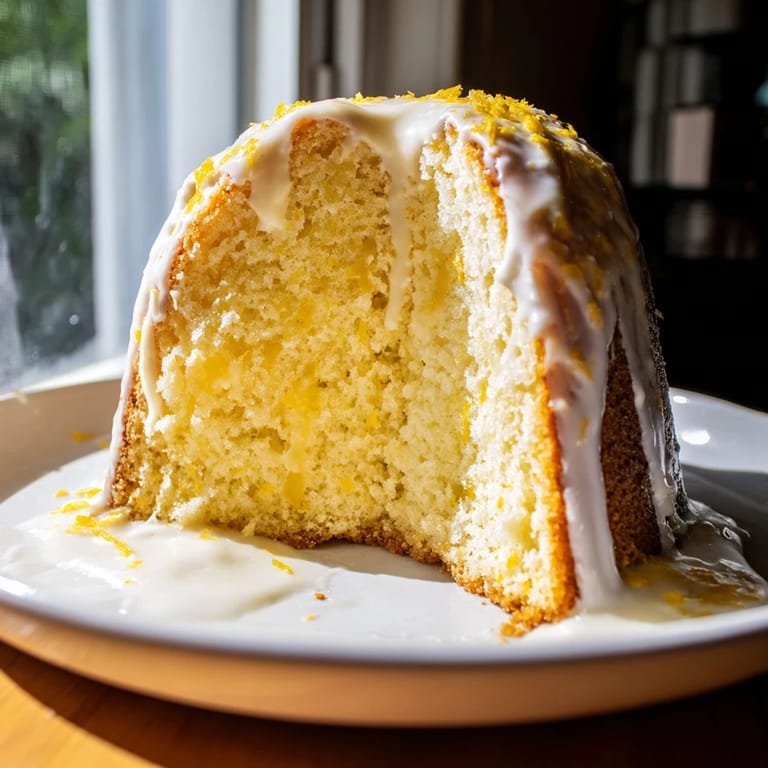
- Drizzle the glaze over the cooled cake in thin, decorative lines, or pour it down the center and let it cascade. Give it 15–20 minutes to set before slicing so it doesn't smear.
 Pin it
 One winter, I made this cake on a whim for my daughter's school fundraiser, and a parent I barely knew told me it was the first time she'd enjoyed a baked good in months—she'd been too anxious to eat, and something about the simplicity and the lemon flavor had just grounded her. I never forgot that. Food isn't just flavor; sometimes it's permission to pause.
Why This Cake Works
Pound cake is called pound cake because it originally contained a pound each of butter, sugar, eggs, and flour—a ratio so balanced that it's almost impossible to mess up. This version reduces that slightly and adds lemon juice and zest to brighten it up, but the foundation stays true. The generous butter content keeps every bite tender and rich, while the lemon cuts through that richness just enough to make you want another slice. There's no complicated folding or technique; just patience and decent ingredients. That's what makes it feel like both a beginner's triumph and a baker's reliable friend.
Storage and Serving Ideas
Wrapped tightly in plastic wrap or stored in an airtight container, this cake stays fresh and moist for three full days at room temperature—which is rare for a butter cake. I actually prefer it on day two or three, when the crumb has had time to settle and the lemon flavor has deepened. You can also freeze it for up to a month; thaw it at room temperature and the texture bounces right back. For tea time, serve it plain or with a thin slice of fresh lemon. For dessert, a dollop of whipped cream or a handful of fresh berries on the side elevates it into something that feels like company food.
Variations and Personal Touches
If you want to amplify the lemon, add 1/2 teaspoon of lemon extract to the batter—it gives a pure, almost floral intensity that pure juice can't reach. Some bakers add a tiny pinch of almond extract alongside the lemon; it's subtle but adds an almost vanilla-like warmth that's hard to name but easy to love. You can also brush the warm cake with a simple lemon syrup before glazing for extra moisture, though the cake is already quite tender without it. I've even made this with Meyer lemons when they're in season—they're slightly sweeter and floral, and the cake becomes almost creamy in flavor.
- Add 1/2 teaspoon lemon extract for brighter, purer lemon intensity.
- Dust the cooled, glazed cake with a tiny pinch of fleur de sel for a sweet-salty contrast.
- Serve warm with a cup of Earl Grey tea for the full afternoon experience.
 Pin it
 This cake has become more than just a recipe in my kitchen—it's become a small, reliable way to mark moments and make people feel noticed. Some desserts are complicated to justify their existence; this one is proof that sometimes the simplest, brightest things are exactly what we needed all along.