 Pin it
 The steam rising from my bowl on that freezing January afternoon changed everything about how I thought about winter soup. I'd been fighting off a cold for days and my grandmother showed up with a jar of homemade miso paste and fresh ginger. The combination of warming spices and probiotic richness felt like being hugged from the inside out. Now whenever the temperature drops below freezing, my kitchen immediately fills with that distinctive ginger aroma that signals comfort is coming.
Last winter during a particularly brutal snowstorm, my roommate stumbled in from shoveling looking like a frozen popsicle. I had a pot of this simmering on the stove and watched her thaw out completely after just one bowl. She texted her mom the recipe immediately and now makes it every time the weather forecast threatens flurries. Theres something almost magical about how quickly it restores you.
Ingredients
- Low-sodium vegetable broth: Starting with less salt lets you control the seasoning since miso varies wildly in saltiness between brands
- Fresh ginger: Slice it paper-thin so it infuses the broth thoroughly without becoming overpowering
- Garlic: Thin slices release flavor more gradually than minced, preventing that harsh raw garlic bite
- White or yellow miso paste: Milder and sweeter than red miso, perfect for this delicate soup
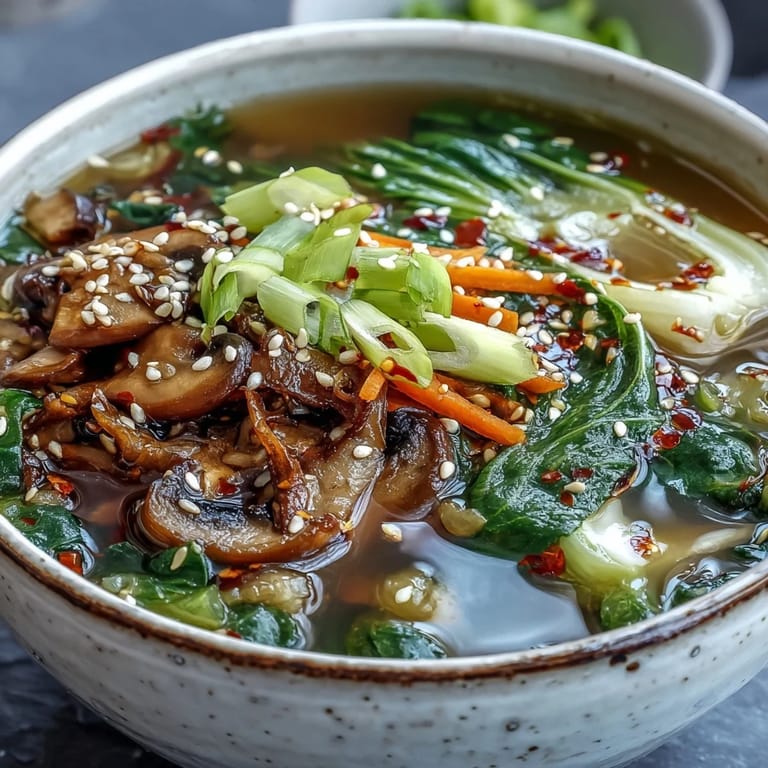
- Shiitake mushrooms: Add meaty umami depth that makes vegetable broth taste surprisingly rich
- Baby spinach or bok choy: Spinach wilts instantly while bok choy holds up slightly longer with a satisfying crunch
- Carrot: Julienned ribbons cook quickly and add beautiful color contrast
- Green onions: Both white and green parts work here for layered onion flavor
- Toasted sesame seeds: The crunch factor that transforms each spoonful from soft to satisfying
Tired of Takeout? 🥡
Get 10 meals you can make faster than delivery arrives. Seriously.
One email. No spam. Unsubscribe anytime.
Instructions
- Build the flavor foundation:
- Bring your broth to a gentle bubble over medium heat, then drop in the ginger slices and garlic. Let them work their magic for 10 minutes until your whole kitchen smells amazing.
- Add the vegetables:
- Toss in the mushrooms and carrot ribbons, cooking for about 5 minutes until theyre tender but still have some bite to them.
- Temper the miso:
- Ladle out about half a cup of hot broth into a small bowl and whisk in your miso paste until completely dissolved. This step prevents clumping and ensures smooth incorporation.
- Unite the flavors:
- Turn your stove down to low and stir the miso mixture back into the pot. Resist the urge to boil it now—high heat kills those beneficial probiotics were after.
- Finish with greens:
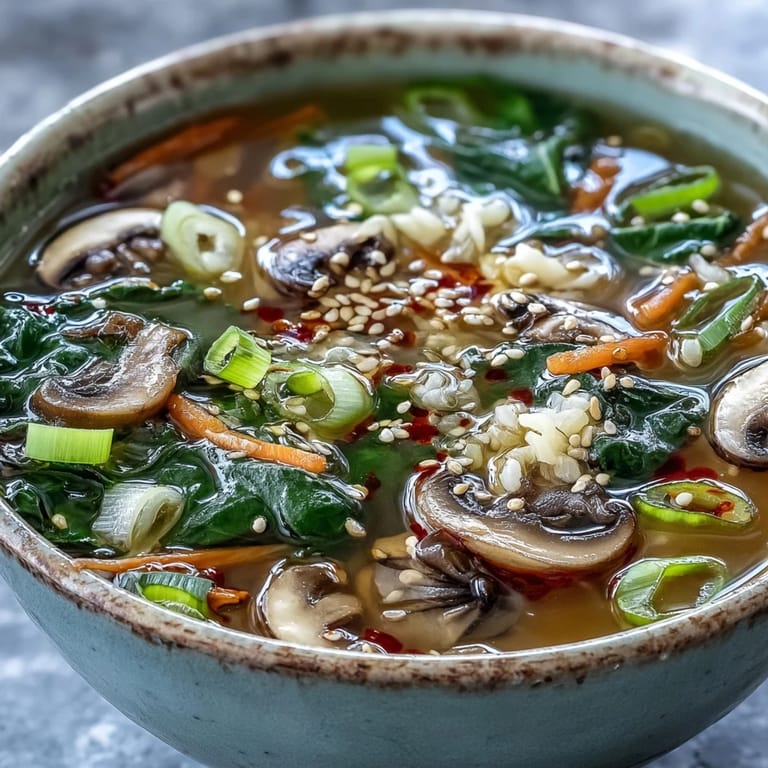
- Drop in your spinach or bok choy plus the green onions, stirring for just a minute until the leaves collapse into the broth.
- Season and serve:
- Taste carefully and adjust with more miso or a splash of soy sauce if needed. Ladle into bowls and shower with sesame seeds, cilantro, and chili oil if you like a little heat.
 Pin it
 My friend Emily stayed over during a particularly rough breakup week and I made this soup three nights in a row. She finally admitted it was the only thing that made her feel like herself again. Food really does hold us together in ways we dont always expect.
Making It Your Own
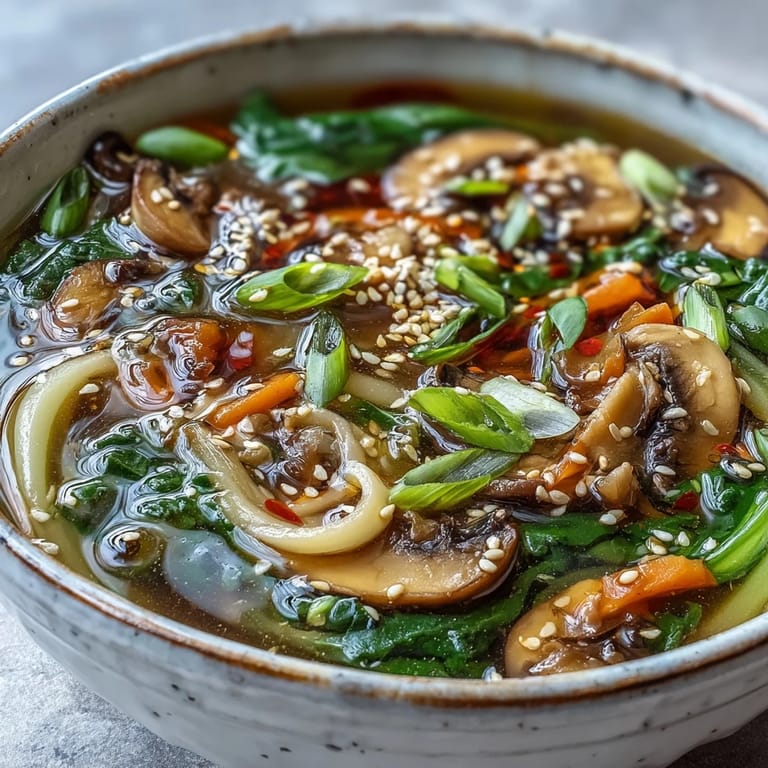
Once you master the basic technique, this soup becomes a canvas for whatever youre craving. Ive added everything from cubed silken tofu for protein to soba noodles for a more substantial dinner. The beauty lies in its flexibility while keeping that soul-warming essence intact.
Stock Management Secrets
After making this soup weekly one winter, I learned to always keep a good quality vegetable broth in my pantry. Homemade broth elevates this significantly, but store-bought works perfectly fine. The key is choosing one you actually enjoy drinking straight since the broth really shines here.
Batch Cooking Wisdom
I make triple batches during soup season and freeze portions without the miso added. The broth, ginger, and vegetables freeze beautifully, then I thaw and whisk in fresh miso right before serving. This preserves both texture and those beneficial probiotics while giving me instant comfort food on busy weeknights.
- Add miso only after reheating frozen portions
- Keep miso paste in the refrigerator for months
- Pair this with crusty bread for a complete meal
 Pin it
 This soup has become my go-to for everything from sick days to dinner parties. Theres something universal about warming broth that just makes people feel taken care of.
Frequently Asked Questions
- → Can I freeze this soup?
Freezing is not recommended as miso's beneficial probiotics may be compromised. The soup tastes best when freshly made, though the vegetable broth base can be prepared ahead and stored separately.
- → What type of miso works best?
White or yellow miso offers a milder, sweeter flavor that pairs beautifully with ginger. Red miso provides a deeper, more intense taste if you prefer stronger umami notes.
- → How do I prevent miso from losing its probiotics?
Always remove the pan from heat before stirring in miso. Never boil the soup after adding miso—gentle warming preserves the beneficial enzymes and live cultures that make miso so nutritious.
- → Can I add protein to make it more filling?
Cubed silken tofu absorbs the savory broth beautifully while adding plant protein. Edamame, cooked chickpeas, or even shredded chicken also work well if you want a heartier bowl.
- → What vegetables can I substitute?
Kale, Swiss chard, or napa cabbage replace spinach nicely. Other mushrooms like cremini or oyster work well. Daikon radish, snap peas, or even bok choy stems add complementary crunch and flavor.