 Pin it
 My neighbor knocked on the kitchen window one April afternoon with a basket of peas still in their pods, dewdrops clinging to the shells. She'd grown them in her garden and somehow knew I was planning a dinner party that weekend. That basket sat on my counter for hours while I debated what to make, and then it hit me—risotto. The kind that lets spring vegetables be the whole story, where each spoonful tastes like you've captured the season itself.
That dinner party happened on a Thursday night when the light lasted until almost eight o'clock. My friend Sarah sat at the counter while I stirred, and she watched the rice transform from hard little pebbles to something creamy and alive. When we served it, someone said it tasted like springtime on a plate, and I realized that's exactly what I'd been trying to make.
Ingredients
- Fresh or frozen green peas (1 cup / 150 g): If you can find fresh ones still in the pod, snap them open and taste one raw—that's the flavor you're chasing, so add them late so they stay that way.
- Small onion, finely chopped: The base of everything, mild and sweet when it turns translucent, almost disappearing into the rice.
- Garlic cloves, minced (2): Just enough to whisper in the background, not shout.
- Arborio rice (1 1/2 cups / 300 g): The short grains release starch as they cook, creating that creamy sauce without any cream—this is the whole magic trick.
- Vegetable stock, kept warm (4 cups / 1 L): Warm stock means the rice keeps cooking steadily; cold stock makes everything seize up and never get tender.
- Dry white wine (1/2 cup / 120 ml): It adds brightness and a tiny bit of acid that makes everything taste more alive.
- Unsalted butter, divided (3 tbsp): Two tablespoons for the beginning to coat the rice, one tablespoon at the end to make everything silky.
- Freshly grated Parmesan cheese (1/2 cup / 40 g), plus extra for serving: Grate it fresh right before you use it; pre-grated loses something essential in those little paper bags.
- Fresh mint leaves, finely chopped (1/4 cup / 10 g): The whole personality of this dish, tender and green, added at the very end so it doesn't turn dark and lose its snap.
- Fresh flat-leaf parsley, chopped (2 tbsp): Optional, but it adds a grounding earthiness underneath all that mint brightness.
- Salt and freshly ground black pepper: Taste as you go; the Parmesan is salty, so go easy at first.
- Lemon zest (1): The unexpected thing that makes people pause and wonder what that brightness is.
Tired of Takeout? 🥡
Get 10 meals you can make faster than delivery arrives. Seriously.
One email. No spam. Unsubscribe anytime.
Instructions
- Start with warmth and gentleness:
- Melt two tablespoons of butter over medium heat in your large saucepan, then add the chopped onion. Let it soften and turn translucent over about four minutes—this is not a race, and the smell will tell you when it's ready. Add the minced garlic and cook for just one more minute until it stops being sharp and becomes fragrant.
- Toast the rice:
- Pour in the Arborio rice and stir it constantly for about two minutes, coating every grain in that butter. You'll hear it click against the pan, and you'll smell something toasty and almost nutty—that's the sign you've done it right.
- Wake it up with wine:
- Pour in the white wine and keep stirring until it's mostly absorbed and the pan isn't sloppy anymore. The rice drinks it in quickly, and the kitchen fills with a warm, slightly acidic smell.
- The patient part:
- Add the warm vegetable stock one ladleful at a time, stirring almost constantly. Each time you pour in a ladle, stir gently until the rice has mostly absorbed the liquid before adding the next ladle—this usually takes about eighteen to twenty minutes total. It feels meditative, almost like a conversation with the rice, and that's when you'll know you're doing it right.
- Bring in the garden:
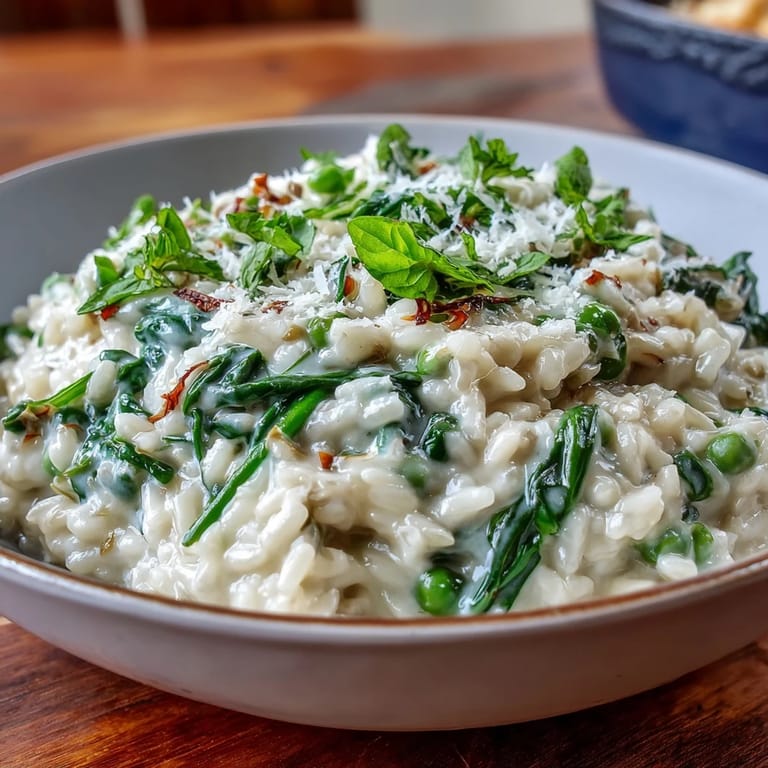
- During the last five minutes, stir in the peas and let them warm through. They'll go from bright green to an even deeper green, and they'll soften just enough to eat easily while still holding their shape and taste.
- The finish that matters:
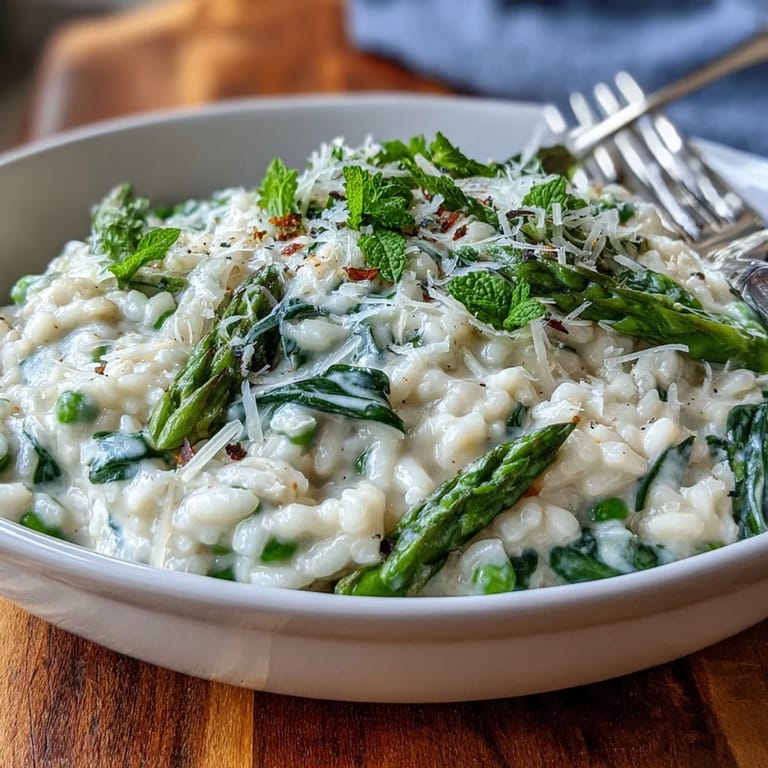
- Remove the pan from heat and stir in the remaining tablespoon of butter, the freshly grated Parmesan, the finely chopped mint, the parsley if you're using it, and the lemon zest. Mix it all together until everything is creamy and the herbs are distributed throughout. Taste it, adjust the salt and pepper, and serve immediately so the mint stays bright.
 Pin it
 After everyone had eaten that Thursday night, someone asked if I would make it again. I said yes immediately, but what I was really thinking was that I wanted to make it again and again, every time spring came around, because it tastes like remembering something good you didn't know you'd forgotten.
The Secret of the Stock
One morning I made risotto with cold stock from the refrigerator and wondered why everything felt stuck and gritty. A friend who grew up in Northern Italy told me that warm stock is not just a suggestion—it's the whole difference between rice that becomes silk and rice that fights you. Since then, I always simmer my stock in a separate pot on the back burner, and I've never had that problem again. The warmth keeps the cooking steady, and the rice releases its starch slowly and evenly instead of seizing up in shock.
Why This Works as Spring Dinner Party Food
Risotto looks like you spent hours in the kitchen, but it only takes forty-five minutes from start to finish, and most of that is just stirring while you talk to your guests. You can prep everything ahead of time—chop the onion and garlic, measure out the rice, wash the mint—so when people arrive, you're not stressed and hiding in the kitchen. The fact that it comes together at the last moment means it's warm and perfect when you plate it, and there's something about serving risotto that feels like real hospitality.
Small Decisions That Change Everything
The first time I made this without the lemon zest, it was good but missing something I couldn't name. The mint was there, the Parmesan was there, but it tasted one-note somehow. That lemon zest opens everything up and makes the brightness pop, so now I always zest the lemon first thing and keep it within arm's reach. The same goes for using truly fresh mint instead of mint from a jar—it makes an enormous difference that people will taste even if they can't quite explain it.
- Grate your Parmesan fresh from a block, never use the stuff in the green can.
- Keep your stock warm and accessible, not sitting cold in a bowl somewhere.
- Add the mint at the very end so it stays green and tender instead of turning dark and tired.
 Pin it
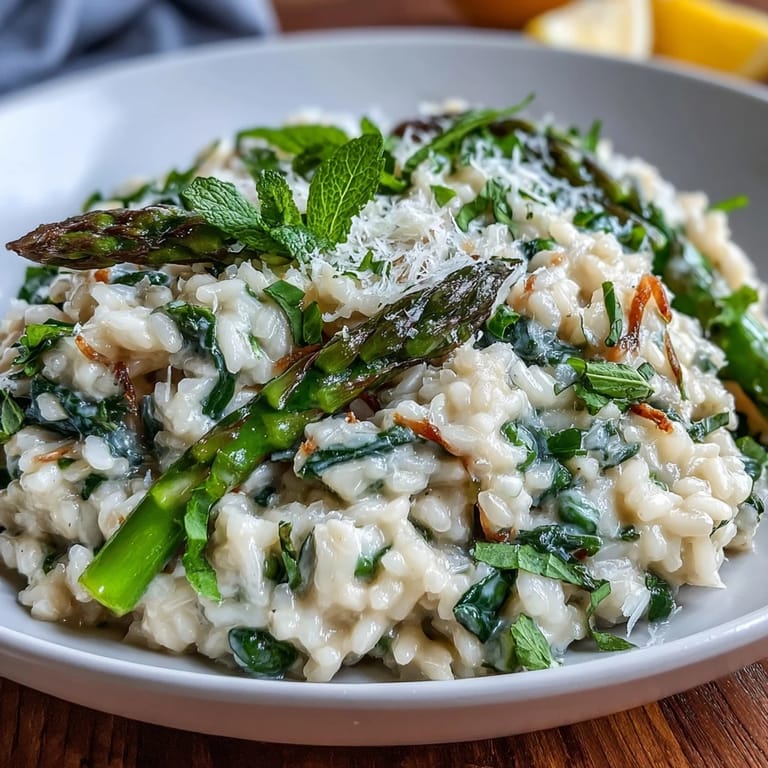
 This risotto became my go-to dinner party dish because it tastes like spring but feels intentional, and it's the kind of meal that makes people linger at the table. Make it when you want to feel like a good cook and a generous host at the same time.
Frequently Asked Questions
- → How do you keep peas bright and tender in the dish?
Add peas toward the last 5 minutes of cooking to preserve their vibrant color and tender texture.
- → What is the best way to achieve creamy risotto texture?
Slowly add warm stock one ladle at a time while stirring constantly until rice is creamy and al dente.
- → Can frozen peas be used as a substitute for fresh peas?
Yes, frozen peas work well if fresh ones aren't available, maintaining sweetness and texture.
- → What role does white wine play in this dish?
White wine adds acidity and depth, enhancing the flavors and aiding rice cooking before adding stock.
- → How can the flavor be enhanced before serving?
Drizzling good-quality olive oil or adding extra grated Parmesan and fresh mint leaves enriches the final taste.