 Pin it
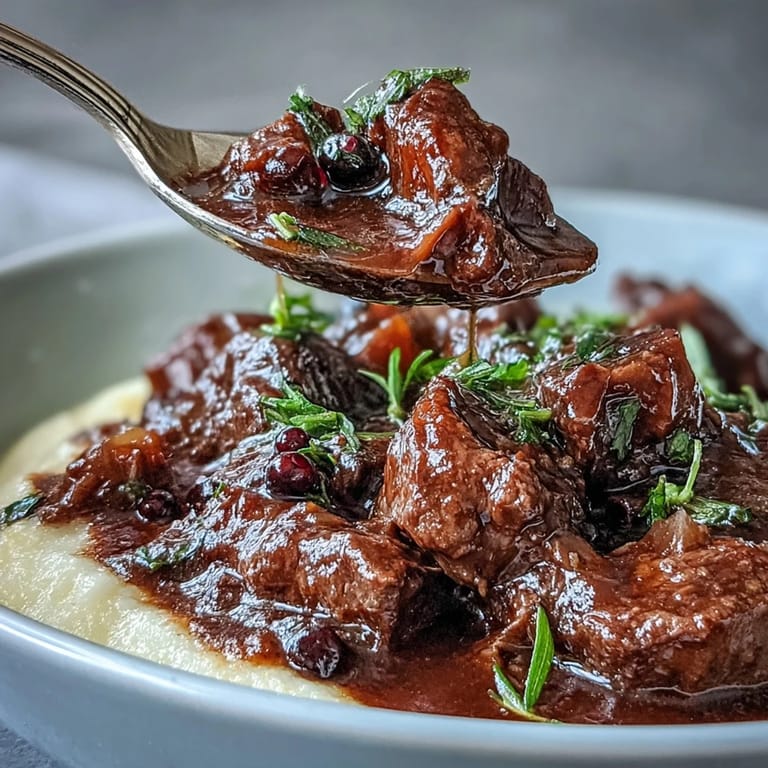
 The smell of browning venison and the faint berry sweetness of sloe gin always takes me straight back to a snowy weekend when the heating broke and the kitchen became the warmest room in the house. I'd bought venison on a whim from the farmer's market, and a friend had left a bottle of homemade sloe gin weeks earlier. I threw them together with whatever vegetables I had, and what came out of that pot was something far better than I'd planned. The meat fell apart with the gentlest nudge of a spoon, and the gin added this wild, fruity depth I'd never tasted in a stew before. We ate it wrapped in blankets, bowls balanced on our knees, and nobody wanted to leave the table.
I made this for a small dinner party once, and my friend who claimed she didn't like game meat went back for seconds without realizing what she was eating. The polenta underneath soaked up all the glossy, dark sauce, turning each spoonful into something silky and complete. We ended up talking late into the night, the kind of conversation that only happens when everyone's warm, full, and slightly wine-drunk. It's become my go-to when I want to impress without fussing, because the oven does all the work while I get to enjoy my guests.
Ingredients
- Venison shoulder or stewing venison (800 g, cut into 3 cm cubes): This cut has enough marbling to stay juicy through long cooking, and venison's earthy flavor pairs beautifully with the juniper and gin.
- Olive oil (2 tbsp): Used for browning the meat, it creates a flavorful base and helps develop that deep, caramelized crust.
- Onion (1 large, finely chopped): The foundation of the stew's sweetness and body, it melts into the sauce as it cooks.
- Carrots (2, sliced): They add a gentle sweetness and hold their shape nicely, giving the stew texture and color.
- Celery (2 stalks, diced): Brings a subtle aromatic backbone that balances the richness of the meat.
- Garlic (2 cloves, minced): Just enough to add warmth without overpowering the delicate game flavor.
- Tomato paste (2 tbsp): Deepens the color and adds umami, a trick I learned from an Italian friend who swears by it in braises.
- Sloe gin (150 ml): The star ingredient, it lends a tart, fruity complexity that's completely unique and festive.
- Beef or game stock (400 ml, gluten-free if needed): The liquid that brings everything together, choose a rich stock for the best depth.
- Redcurrant jelly (1 tbsp): A small spoonful adds sweetness and gloss to the sauce, balancing the gin's tartness.
- Bay leaves (2): Essential for that warm, herbal note that makes the stew smell like home.
- Fresh thyme (2 sprigs): Adds an earthy, slightly floral note that complements the venison perfectly.
- Juniper berries (1 tsp, lightly crushed): These little berries echo the botanical notes in the gin and are traditional with game.
- Salt and freshly ground black pepper: Season generously, venison loves a good seasoning.
- Whole milk (750 ml): Makes the polenta creamy and rich, far better than water alone.
- Water (250 ml): Thins the milk just enough to keep the polenta from becoming too heavy.
- Polenta (150 g, quick-cooking or regular): The creamy base that soaks up all that gorgeous sauce, use the type you prefer but adjust cooking time accordingly.
- Unsalted butter (40 g): Stirred in at the end, it makes the polenta glossy and indulgent.
- Grated Parmesan cheese (50 g): Adds a salty, nutty richness that turns simple polenta into something special.
Tired of Takeout? 🥡
Get 10 meals you can make faster than delivery arrives. Seriously.
One email. No spam. Unsubscribe anytime.
Instructions
- Brown the venison:
- Heat the olive oil in a large, heavy-based casserole over medium-high heat until shimmering. Brown the venison cubes in batches, making sure not to overcrowd the pan, then set them aside on a plate.
- Soften the vegetables:
- In the same pan, add the onion, carrots, and celery, cooking for 5 to 7 minutes until they soften and begin to color. Stir in the garlic and tomato paste, cooking for another minute until fragrant.
- Deglaze with sloe gin:
- Return the browned venison to the pan and pour in the sloe gin, letting it bubble and reduce slightly for about 2 minutes. The smell at this stage is intoxicating.
- Build the stew:
- Add the stock, redcurrant jelly, bay leaves, thyme, and lightly crushed juniper berries, then season generously with salt and pepper. Bring everything to a gentle simmer.
- Slow cook until tender:
- Cover the casserole and cook on low heat for 2 hours, stirring occasionally, until the venison is fall-apart tender and the sauce has thickened beautifully.
- Prepare the polenta:
- While the stew is cooking, heat the milk and water in a saucepan until just simmering. Gradually whisk in the polenta, stirring constantly to avoid lumps.
- Finish the polenta:
- Cook the polenta over low heat for 5 to 10 minutes, or according to packet instructions, until thick and creamy. Stir in the butter and Parmesan, then season with salt to taste.
- Serve:
- Remove the bay leaves and thyme sprigs from the stew and ladle it generously over bowls of creamy polenta. Serve hot and watch everyone go quiet with contentment.
 Pin it
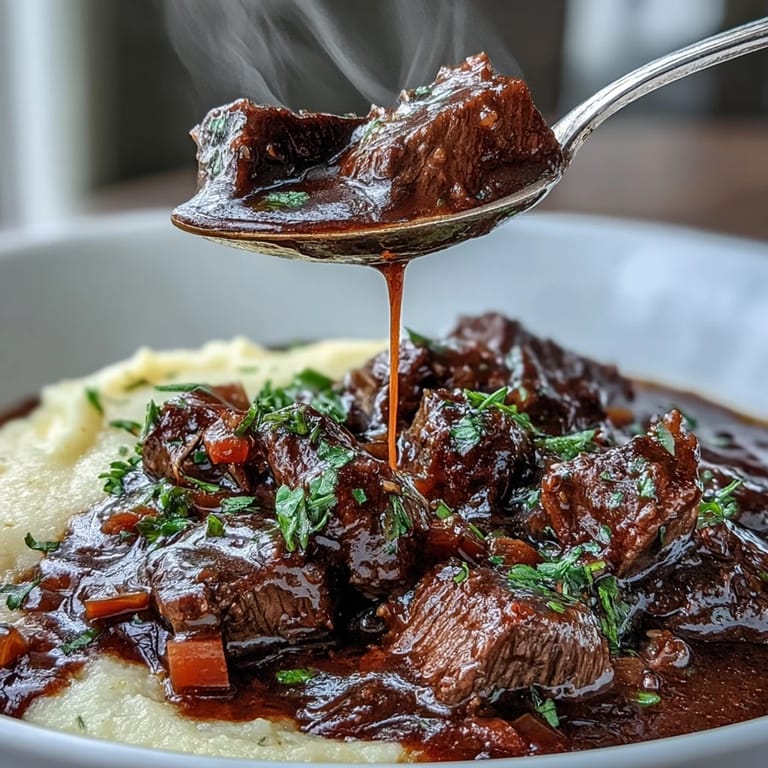
 One winter evening, I served this to my parents, and my dad, who normally rushes through meals, put down his fork halfway through and said it reminded him of something his grandmother used to make. He couldn't quite place it, but the juniper and the richness brought back some half-forgotten memory. That's when I realized this dish doesn't just fill you up, it reaches something deeper, something about warmth and care and the comfort of being looked after.
What to Do If You Can't Find Sloe Gin
I once ran out of sloe gin halfway through prep and used a good port instead, and honestly, it was just as delicious, just a little sweeter and less tart. You could also try a berry liqueur like cassis or even a fruity red wine with a spoonful of jam stirred in. The key is that slight fruity sharpness that cuts through the richness of the venison, so don't be afraid to improvise with what you have.
Making It Ahead
This stew is one of those rare dishes that actually improves after a night in the fridge, the flavors meld and deepen in a way that's almost magical. I often make it a day ahead, then gently reheat it while I cook fresh polenta, and it tastes like I've been slaving away all day when really I've just been reheating. The polenta is best made fresh, though, because it tends to firm up and lose its creaminess when stored.
Serving and Pairing Suggestions
I like to finish each bowl with a scattering of fresh parsley or thyme, just for a bit of color and brightness against all that dark, glossy sauce. A robust red wine, something like a Shiraz or Cabernet Sauvignon, stands up beautifully to the richness of the venison. If you want to stretch the meal further, serve it with a simple green salad dressed in sharp vinaigrette, the acidity helps balance everything out.
- Garnish with chopped fresh parsley or a few thyme leaves for a pop of color.
- Pair with a bold red wine that can handle the game and the fruit notes.
- Leftovers can be frozen for up to three months, just reheat gently with a splash of stock.
 Pin it
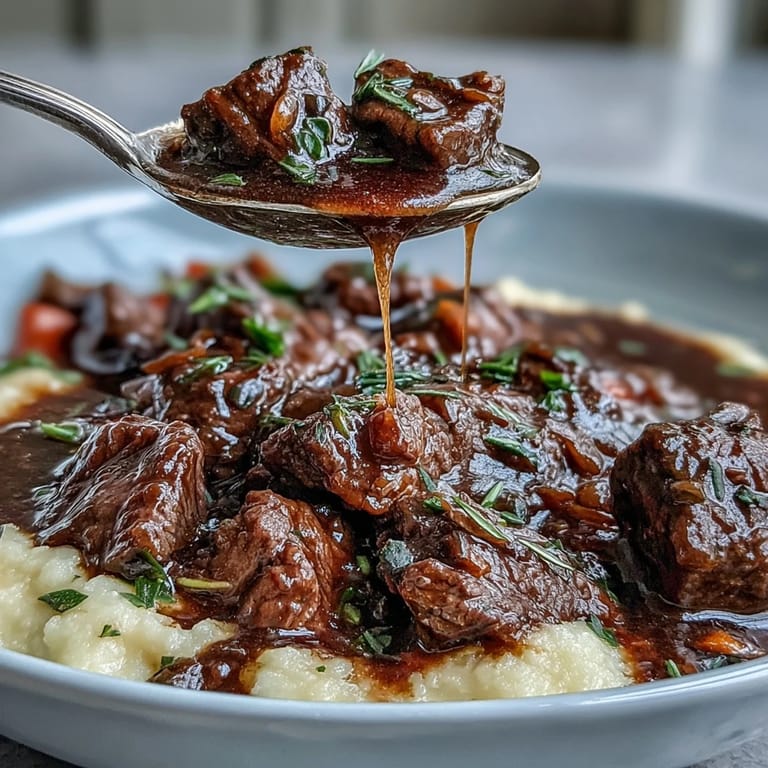
 This is the kind of meal that turns a cold night into something worth looking forward to, the sort of dinner that makes you linger at the table long after the plates are empty. I hope it brings you as much comfort and joy as it's brought me.
Frequently Asked Questions
- → Can I substitute the venison with another meat?
Yes, beef stewing meat or lamb shoulder work well as alternatives. Cooking times may vary slightly, but aim for the same tender result after 2 hours of simmering.
- → What can I use instead of sloe gin?
Port, red wine, or berry liqueurs like blackberry brandy make excellent substitutes. Each will add a slightly different flavor profile while maintaining the rich, fruity depth.
- → Can I make this ahead of time?
Absolutely. The stew tastes even better the next day as flavors develop. Refrigerate for up to 3 days or freeze for up to 3 months. Prepare fresh polenta when serving.
- → What type of polenta should I use?
Quick-cooking polenta works well for weeknight convenience, taking 5-10 minutes. Traditional polenta requires 40-50 minutes but offers superior texture and flavor.
- → How do I prevent the venison from becoming tough?
Brown the meat gently without overcooking, then maintain a gentle simmer rather than a rolling boil. Low, slow cooking is key to breaking down the connective tissue for tender results.
- → Can I make this in a slow cooker?
Yes, after browning the meat and sautéing vegetables, transfer everything to a slow cooker. Cook on low for 6-8 hours or high for 4-5 hours until the venison is tender.