 Pin it
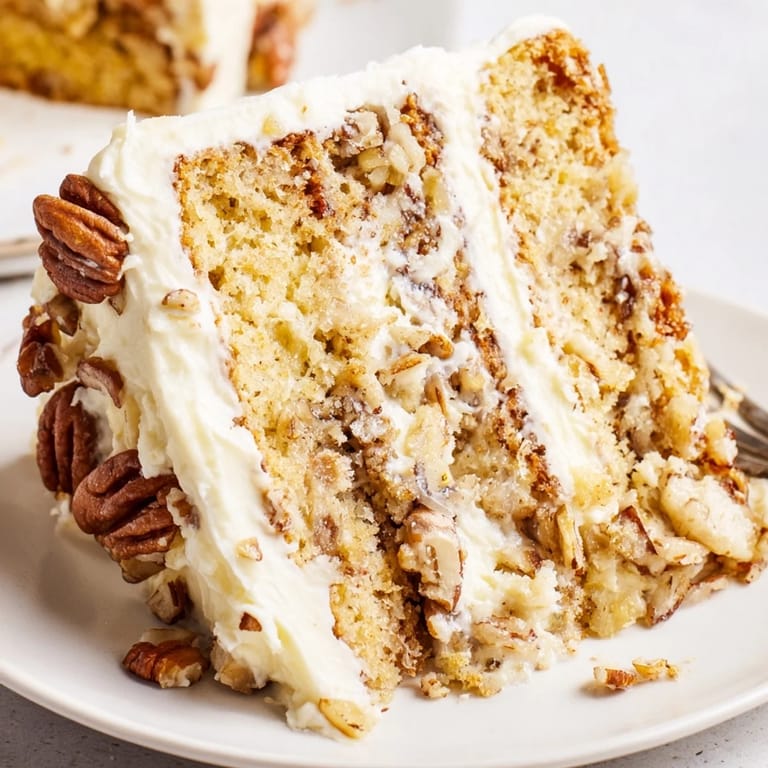
 My grandmother's kitchen always smelled like a tropical bakery whenever she made her Hummingbird Cake for church gatherings, and I spent years watching her fold mashed bananas and crushed pineapple into that oil-based batter before finally asking for the recipe. What struck me most wasn't just how moist the cake stayed, but how the pineapple juice saturated every crumb while the toasted pecans added this warm, almost buttery depth that made each bite feel intentional. The first time I made it alone, I was nervous about the three-layer structure, but there's something about this particular recipe that seems forgiving—like it knows you're learning. Now, I reach for it whenever I need a cake that tastes homemade in the best way, one that makes people slow down and actually taste it.
I'll never forget frosting this cake for my best friend's surprise party in my tiny apartment kitchen—I'd made the layers the day before, and when I turned around to grab the frosting bowl, I knocked over the entire piping bag across the counter. Instead of panicking, I just spread the frosting on with an offset spatula, gave it a rustic look, and scattered extra pecans on top to make it intentional. Everyone at that party asked for the recipe, and someone said it looked like it came from a magazine, which made me laugh knowing the truth.
Ingredients
- All-purpose flour: The foundation that keeps these layers tender rather than dense; don't sift obsessively, just whisk it with the other dry ingredients to distribute the leavening evenly.
- Granulated sugar: Creams with the oil to help trap air and moisture, creating that signature soft crumb.
- Baking soda and ground cinnamon: The soda reacts with the fruit's natural acidity to lift the cake, while cinnamon whispers in the background without overpowering the tropical flavors.
- Eggs (room temperature): Cold eggs won't emulsify properly with the oil, so let them sit out while you prep everything else.
- Vegetable oil: Oil creates a more tender, longer-lasting crumb than butter alone could achieve in this recipe.
- Ripe bananas and crushed pineapple: These aren't just flavor—they're moisture delivery systems, and their juices are essential, so never drain the pineapple.
- Toasted pecans: Toasting them first deepens their flavor and prevents them from disappearing into the cake; save some extra for garnish because they're too good not to.
- Cream cheese and unsalted butter for frosting: Let both soften completely at room temperature or the frosting will break and look grainy instead of smooth.
Tired of Takeout? 🥡
Get 10 meals you can make faster than delivery arrives. Seriously.
One email. No spam. Unsubscribe anytime.
Instructions
- Prep your pans and set the oven temperature:
- Preheat to 350°F and grease three 8-inch round pans with either butter and flour or parchment paper rounds. Cold pans can cause uneven baking, so let everything warm up while you mix.
- Combine all dry ingredients:
- Whisk flour, sugar, baking soda, cinnamon, and salt together in a large bowl until you don't see any streaks of cinnamon or baking soda. This distribution matters because it ensures every slice has balanced leavening.
- Mix the wet base:
- Beat eggs with oil and vanilla until the mixture looks slightly paler and starts to emulsify. This step seems simple, but it's building the structure that holds everything together.
- Fold in the fruit and nuts:
- Stir in mashed bananas, crushed pineapple with every drop of its juice, and toasted pecans. The batter should smell tropical at this point.
- Gently marry wet and dry:
- Pour the wet ingredients into the dry bowl and stir just until you don't see white streaks of flour anymore. Overmixing develops gluten and makes the cake dense, so resist the urge to beat it into submission.
- Divide batter evenly:
- Pour into prepared pans, using a scale if you have one, or just divide it as evenly as you can with a spatula. Even layers bake more evenly.
- Bake until golden and set:
- Bake for 25 to 30 minutes, until a toothpick inserted in the center comes out clean with maybe a few moist crumbs clinging to it. The tops should be golden and spring back slightly when you touch them lightly.
- Cool with intention:
- Let layers rest in pans for 10 minutes so they set up enough to turn out without breaking, then invert onto wire racks and cool completely. This patient cooling prevents the frosting from melting into warm cake.
- Make the frosting:
- Beat softened cream cheese and butter together until they're pale and fluffy, about 2 minutes. Gradually add sifted powdered sugar, vanilla, and salt, beating on low speed until smooth and spreadable—this prevents clouds of sugar from flying everywhere.
- Assemble the cake:
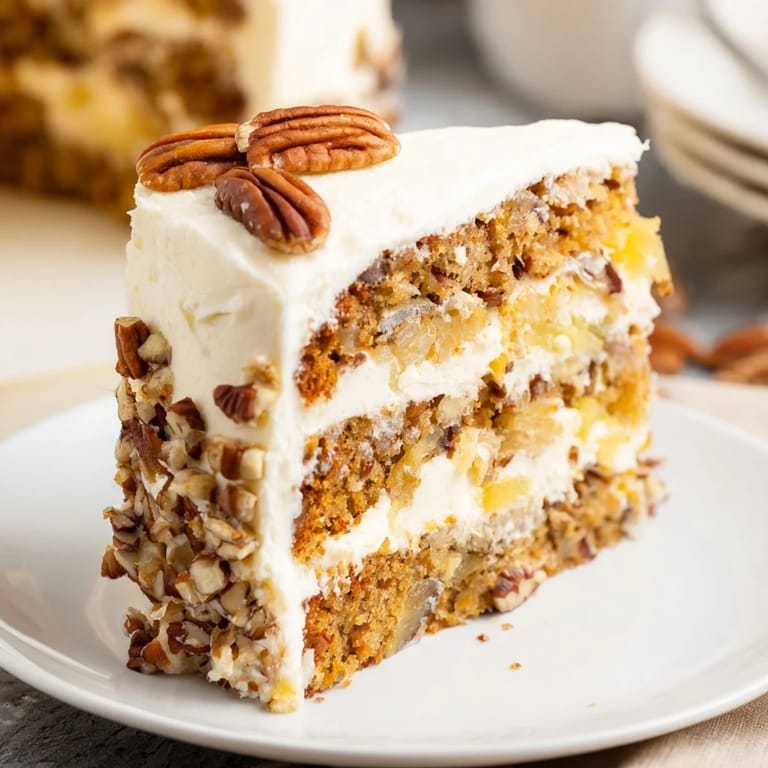
- Place the first layer on your serving plate, spread frosting between layers and over the sides, then top with the final layer. Frost the top, then press extra toasted pecans around the edge and scattered across the top.
 Pin it
 There was an afternoon when my niece watched me frost this cake and asked why bananas and pineapple belonged together in a cake at all, and I realized I'd never questioned it—I'd just trusted the tradition. Turns out, there's wisdom in that combination: the banana provides structure and richness while the pineapple keeps everything bright and prevents the cake from feeling heavy. That's when I understood that this cake isn't just a recipe; it's someone's answer to the question of how to make a celebration taste both comforting and special at the same time.
Storage and Make-Ahead Magic
Unfrosted cake layers keep beautifully wrapped in plastic wrap for up to two days, and I've found that baking them the day before actually gives you better layers to work with because they're sturdier and easier to frost. The frosted cake stays fresh covered loosely on the counter for three days, or you can refrigerate it for up to five days if you need more time—just let it sit at room temperature for 30 minutes before slicing so the frosting has a bit of give.
Why This Cake Became Southern Tradition
The hummingbird cake earned its name because the colors and flavors were said to attract hummingbirds (they don't actually, but the poetry stuck), and it shows up at church potlucks, family celebrations, and grandmother's tables across the South because it's both manageable and impressive. There's no temperamental chiffon technique, no mysterious folding required—just straightforward mixing and a little patience.
Flavor Pairing and Serving Notes
Serve this cake with strong black coffee that cuts through the richness, or alongside sweeter beverages like a dessert wine or hot tea. The frosting is generous and tangy enough to balance the tropical fruit, and the pecans add earthiness that keeps the whole thing from tasting one-dimensional.
- For a nut-free version, simply omit the pecans and you'll still have a spectacular cake with excellent texture.
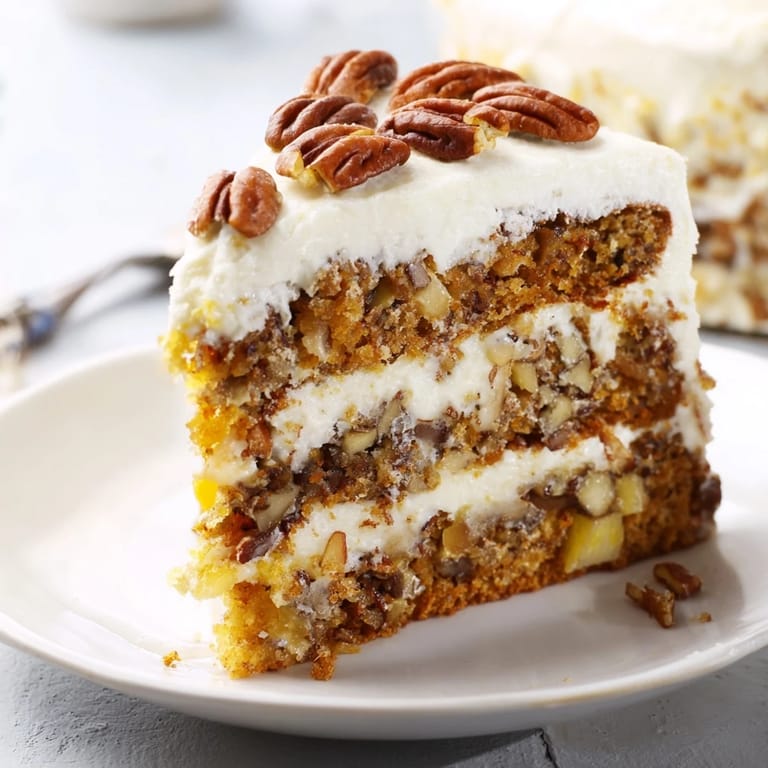
- Individual cake slices stay moist and hold their shape beautifully, making this an excellent option for a dessert box or picnic.
- If fresh pecans aren't available, any toasted nut works—walnuts or even almonds bring their own warm character to the cake.
 Pin it
 This cake has a way of turning an ordinary day into something worth celebrating, and I've learned that's reason enough to make it whenever the mood strikes. The effort is honestly minimal, but the result tastes like someone spent all day in the kitchen thinking about you.
Frequently Asked Questions
- → What gives this cake its moist texture?
The combination of ripe mashed bananas, crushed pineapple with juice, and vegetable oil keeps the cake wonderfully moist and tender.
- → Can pecans be omitted without affecting taste?
Yes, pecans add crunch and flavor but can be omitted for a nut-free alternative without compromising moisture or overall taste.
- → How is the cream cheese frosting prepared?
Softened cream cheese and unsalted butter are beaten until smooth, then powdered sugar, vanilla extract, and a pinch of salt are gradually added until fluffy and spreadable.
- → What is the best way to prevent overmixing the batter?
Combine wet and dry ingredients gently until just incorporated to avoid developing gluten, which keeps the cake tender.
- → How should the cake layers be cooled before frosting?
After baking, cool the layers in their pans for 10 minutes, then transfer to wire racks to cool completely before applying frosting.