 Pin it
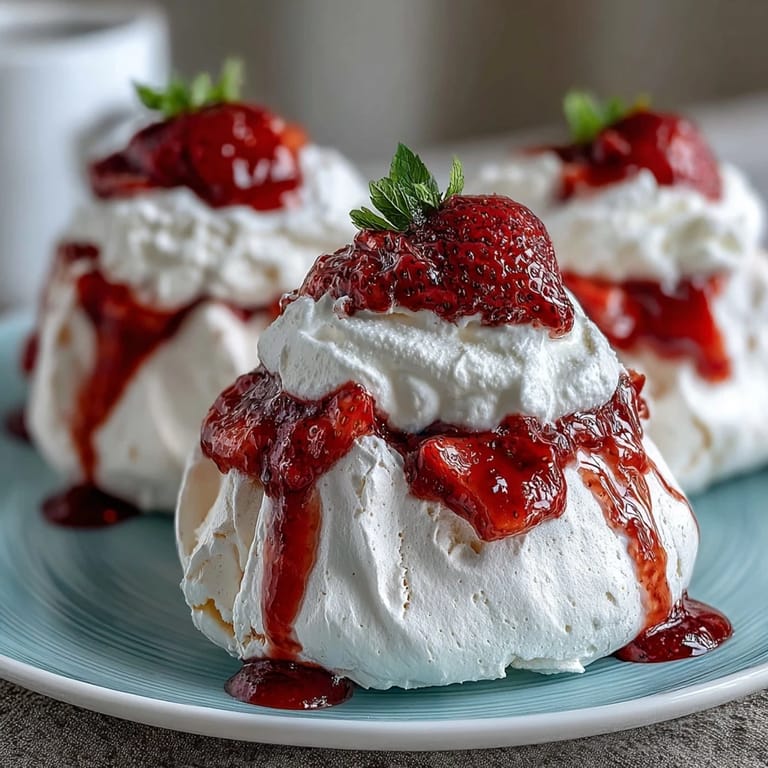
 My sister brought home a pavlova from a London bakery during her study abroad semester, and I watched her carefully unwrap it like it was spun sugar treasure. That crisp exterior that shattered under a fork, giving way to marshmallow softness, then the cool cream and bright strawberries—it felt impossibly fancy for something I could apparently make myself. After a few failed attempts (one that collapsed before it even made it to the cooling stage), I finally cracked the code, and now this dessert shows up whenever I want to impress without spending hours in the kitchen.
I made this for my friend's birthday brunch, and she took one bite and immediately asked if I'd gone to culinary school. The truth was messier—I'd burned two batches the week before, forgotten to let the oven cool properly, and nearly cried over a cracked meringue. But that moment when she closed her eyes after the first forkful, that's when I realized pavlova had stopped being a recipe and become something I actually enjoyed making.
Ingredients
- Egg whites (4 large, room temperature): Temperature matters more than you'd think—cold eggs won't whip to stiff peaks as quickly, and you'll lose patience. Let them sit on the counter for 20 minutes.
- Superfine sugar (1 cup): Regular granulated sugar works, but superfine dissolves faster into the egg whites, giving you that signature glossy finish without graininess.
- Cornstarch (1 tsp): This stabilizes the meringue and keeps it from weeping, which is that liquid that pools underneath if you're not careful.
- White vinegar (1 tsp): It sounds odd, but this prevents crystallization and adds a subtle tang that softens the sweetness of the sugar.
- Vanilla extract (1 tsp for meringue, 1 tsp for cream): Use good vanilla—the cheap stuff won't carry its weight across the whole dessert.
- Heavy cream (1 cup, chilled): Keep your bowl and beaters in the freezer for 10 minutes before whipping; cold cream whips faster and holds better.
- Powdered sugar (2 tbsp): Cornstarch can substitute here if you need it, though powdered sugar dissolves more smoothly into the cream.
- Fresh strawberries (2 cups, hulled and sliced): Pick berries that smell fragrant—that's your signal they're actually ripe. Mealy ones will disappoint.
- Granulated sugar for macerating (1 tbsp, optional): This draws out the strawberry juice, making them release their own syrup, which is pure magic on a pavlova.
- Fresh mint leaves (optional): Adds color and a whisper of freshness, though it's entirely for looks if you don't have it on hand.
Tired of Takeout? 🥡
Get 10 meals you can make faster than delivery arrives. Seriously.
One email. No spam. Unsubscribe anytime.
Instructions
- Set up your canvas:
- Preheat your oven to 275°F and line a baking sheet with parchment paper. Draw a 9-inch circle with a pencil on the underside of the parchment—this becomes your shape guide and honestly takes the guesswork out of how big to make it.
- Whip those egg whites:
- Use a scrupulously clean bowl (any fat will sabotage you), then beat egg whites on medium speed until they look foamy and white, about 2 minutes. You'll know soft peaks are forming when the mixture holds a peak that droops slightly when you lift the beaters out.
- Build the meringue magic:
- Add superfine sugar one tablespoon at a time, beating on high between each addition. This takes patience but pays off—you're building a glossy, thick meringue that should look like shiny clouds after about 7 to 10 minutes. The mixture should feel smooth when you rub a tiny bit between your fingers, never grainy.
- Fold in the stabilizers:
- Sprinkle the cornstarch, vinegar, and vanilla over the meringue, then use a spatula to gently fold everything together with about 10 large strokes. This is where you stay gentle—you've worked hard to build volume, and folding (not stirring) preserves those air pockets.
- Shape and bake:
- Spoon the meringue onto your parchment circle, mounding it slightly in the center and creating slightly raised edges like a nest. Bake for 1 hour 15 minutes until the outside is pale cream and feels dry to the touch, then turn off the oven and let it cool completely inside with the door cracked open—this prevents sudden temperature changes that crack the shell.
- Whip the cream:
- While the meringue bakes, chill your bowl and beaters, then whip the heavy cream with powdered sugar and vanilla until soft peaks form (not stiff—soft peaks are forgiving and look more cloud-like). This happens faster than you'd expect, usually around 2 to 3 minutes, so stay close.
- Macerate those berries:
- Toss your sliced strawberries with granulated sugar in a separate bowl and let them sit for 10 minutes. You'll see them start to release juice, which is exactly what you want—this becomes a light syrup that soaks into the cream.
- Final assembly:
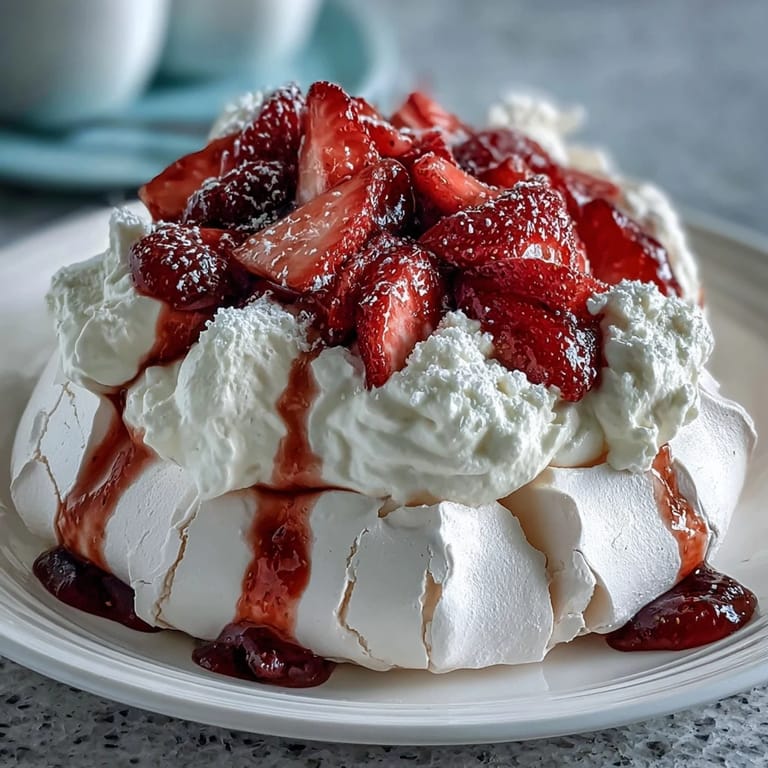
- Once the meringue is completely cool, carefully transfer it to your serving plate (use two spatulas if you're nervous). Spread the whipped cream across the center, then pile those macerated strawberries on top and scatter mint leaves if you're using them.
- Serve right away:
- Pavlova is best eaten within an hour of assembly before the meringue begins to soften from the moisture of the cream and berries. This is actually perfect timing—it forces you to sit down and eat dessert immediately, which is never a hardship.
 Pin it
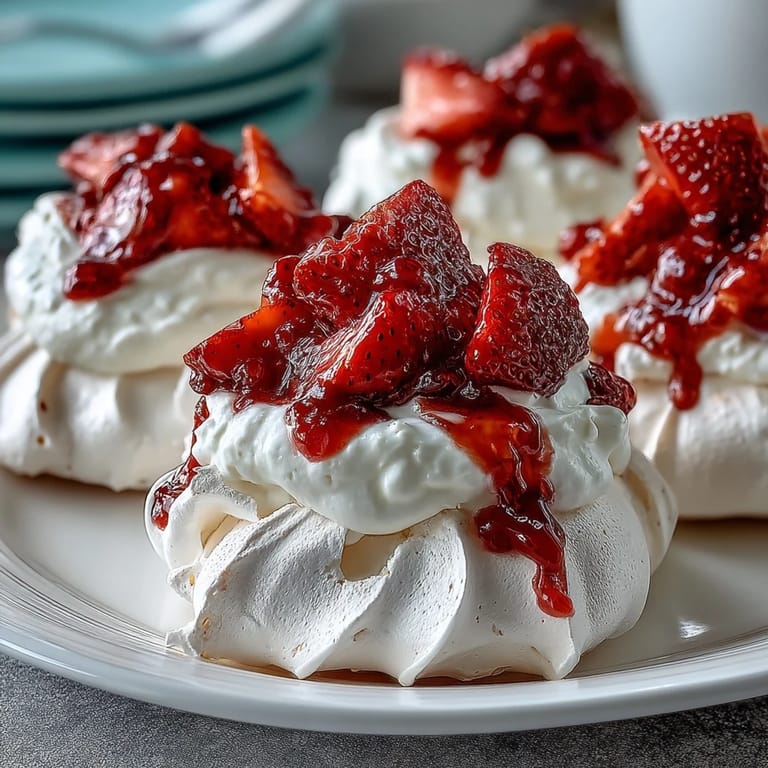
 My mom asked me to make this for her book club, and one of the members actually asked for the recipe, which felt like winning the lottery. Watching people's faces light up when they bite through that paper-thin crispy shell into the soft, pillowy center is somehow never boring, no matter how many times I've made it.
The Meringue Moment
The meringue is the whole show here, and it's also the part that feels most intimidating. But honestly, it's just egg whites, sugar, and patience—there's no magic, just chemistry. The key is understanding that you're building a stable foam by incorporating air, then stabilizing that foam with sugar so it holds together during baking. Once you've done it once and watched those peaks form, you'll understand it's less mysterious than it seems.
Berry Choices Beyond Strawberries
Strawberries are the classic for good reason, but I've used raspberries, blackberries, blueberries, or a combination and never been disappointed. The tartness of berries balances the sweetness of the meringue and cream in a way that feels almost designed to complement each other. The only rule is to use berries that actually taste good—if they're under-ripe or flavorless from the grocery store, they'll disappoint.
Storage and Make-Ahead Strategy
The meringue shell is actually best made the day before and stored in an airtight container—it stays crispy and you've done the heavy lifting already. Whip the cream and prepare the strawberries just before serving, then assemble at the last possible moment. This approach takes the stress out of entertaining and means you're not frantically whipping cream while guests arrive.
- Store the baked meringue shell in a cool, dry place or in an airtight container at room temperature—moisture is the enemy of crispiness.
- The assembled pavlova starts softening after about 30 to 45 minutes as the cream releases moisture, so eat it while it's still at its peak.
- Don't refrigerate an assembled pavlova; the cold turns the meringue tough and rubbery, which defeats the whole textural purpose.
 Pin it
 This dessert tastes like summer feels—light, a little bit fancy, and somehow both fragile and impossible to get wrong. Once you've made it once, you'll find excuses to make it again.
Frequently Asked Questions
- → How do I achieve stiff peaks when whipping egg whites?
Ensure your bowl and beaters are completely clean and free of fat. Use room temperature egg whites and beat them at medium speed until soft peaks form, then gradually increase speed until stiff, glossy peaks develop.
- → What is the purpose of adding cornstarch and vinegar to the meringue?
Cornstarch helps stabilize the meringue, adding a slightly chewy texture inside, while vinegar balances the pH, enhancing stability and preventing weeping during baking.
- → Can I use other berries instead of strawberries?
Yes, a mix of berries such as blueberries, raspberries, or blackberries can be used to top the pavlova for varied flavor and color.
- → How should I store leftovers to maintain texture?
Store any leftovers in an airtight container in the refrigerator. Note that the meringue may soften over time due to moisture from toppings.
- → Is it necessary to macerate the strawberries before topping?
Macerating the strawberries with a bit of sugar for 10 minutes helps release their juices and enhances their sweetness, balancing tartness in the dessert.
- → What temperature is best for baking the meringue?
Bake at a low temperature of 275°F (135°C) to dry out the meringue slowly, ensuring a crisp exterior and marshmallow-soft interior.