 Pin it
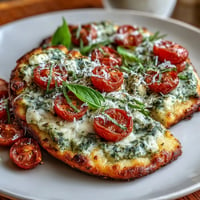
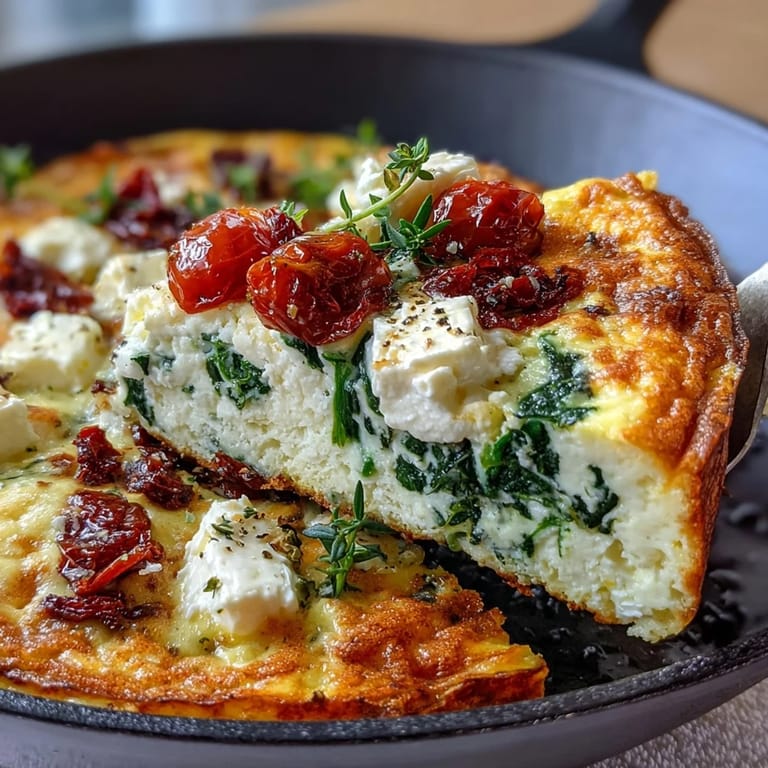
 My neighbor Elena knocked on my door one Sunday morning with a basket of sun-dried tomatoes from her garden and a challenge: make something that would impress her visiting sister from Athens. I'd never worked with sun-dried tomatoes before, but something about their deep color and concentrated flavor felt right for eggs. Two hours later, we were all gathered around my kitchen table with slices of this golden frittata, and Elena's sister was asking for the recipe before she'd even finished her first bite.
The real turning point came during a casual weeknight dinner when I realized I could cut this frittata into wedges and pack them for work the next day. My coworker Jake stole a bite from my lunch container and suddenly everyone wanted to know what I'd made. There's something satisfying about a dish that works for brunch, lunch, or a light dinner—it became my go-to when I wanted to feel like I'd actually cooked something impressive.
Ingredients
- Fresh baby spinach (2 cups): The tenderness matters here—baby spinach wilts in seconds and releases its moisture quickly, keeping the frittata from becoming watery.
- Sun-dried tomatoes (1/2 cup, julienned): Buy the ones packed in oil and drain them well; they bring a concentrated sweetness and subtle tang that makes every bite interesting.
- Yellow onion (1 small): Finely chop it so it softens completely and distributes its sweetness throughout without overpowering the delicate eggs.
- Garlic (1 clove): Minced garlic blooms when it hits hot oil for just a moment—don't let it brown or it turns bitter and harsh.
- Large eggs (6): Room temperature eggs blend more smoothly and cook more evenly than cold ones straight from the fridge.
- Whole milk (1/4 cup): This creates a custardy texture rather than a dense, rubbery frittata; whole milk matters because the fat is essential.
- Feta cheese (1/2 cup, crumbled): Crumble it by hand rather than grating so you get uneven pockets of cheese that don't melt into uniformity.
- Parmesan cheese (1/4 cup, grated): The umami from aged Parmesan adds depth and helps the top develop that golden crust in the oven.
- Dried oregano (1/2 tsp): This is the Mediterranean signature—it ties all the flavors together without needing fresh herbs.
- Freshly ground black pepper and salt (1/4 tsp each): Season in layers as you cook, not just at the end; it tastes more integrated this way.
- Olive oil (2 tbsp): Use good quality oil because you taste it directly here, and it helps everything cook evenly.
Tired of Takeout? 🥡
Get 10 meals you can make faster than delivery arrives. Seriously.
One email. No spam. Unsubscribe anytime.
Instructions
- Heat your oven and skillet:
- Get your oven to 375°F while you pull out a 10-inch ovenproof skillet—cast iron or stainless steel both work beautifully. The skillet needs to go from stovetop to oven, so this step matters more than it sounds.
- Build your flavor foundation:
- Warm the olive oil over medium heat and add your chopped onion, letting it soften and turn translucent for 3 to 4 minutes. When you smell that sweet onion aroma, you know you're ready for the garlic.
- Add garlic and bloom it:
- Stir in your minced garlic and let it cook for just 1 minute—any longer and it becomes acrid instead of fragrant. You want that kitchen filled with the smell of cooked garlic, not burnt garlic.
- Wilt the spinach:
- Add your chopped spinach and stir constantly for about 2 minutes until it releases its moisture and turns a deeper green. Don't walk away during this part because spinach changes in seconds.
- Introduce the sun-dried tomatoes:
- Stir in your drained sun-dried tomatoes and cook for 1 minute, letting their oil coat the vegetables and everything get to know each other.
- Prepare your egg mixture:
- In a separate bowl, whisk your eggs with milk, oregano, salt, and pepper until it's well combined and slightly frothy. The froth will help create that fluffy texture you're after.
- Combine cheeses into the egg mixture:
- Stir your crumbled feta and grated Parmesan into the egg mixture so the cheese is distributed throughout rather than settling at the bottom.
- Pour and gently combine:
- Pour the egg mixture into your vegetable-filled skillet, then give it one gentle stir to make sure everything is distributed. Don't overwork it or you'll deflate all that air you just whisked in.
- Start on the stovetop:
- Cook over medium heat for 2 to 3 minutes, watching until the edges start to set and pull away slightly from the skillet's sides. The center will still look wet—that's exactly right.
- Transfer to the oven:
- Carefully move the skillet to your preheated oven and bake for 10 to 12 minutes until the center is just set and the top has turned a light golden color. Use oven mitts because that handle will be hot enough to surprise you.
- Cool and serve:
- Let it rest for a few minutes before running a thin spatula around the edges and slicing it into wedges. It's delicious warm straight from the oven or at room temperature a few hours later.
 Pin it
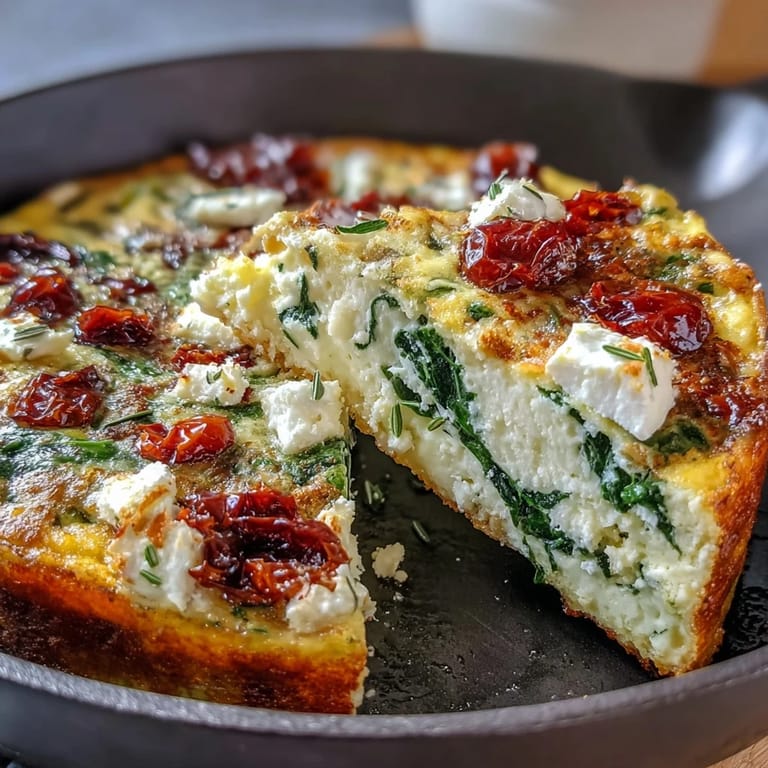
 What stuck with me most wasn't the praise, though that was nice. It was my mom asking if I could teach her this frittata so she could make it for her book club—suddenly it transformed from being a dish I'd made into something that belonged to my family's rotation. Now when I make it, I think about those conversations that happen around food, the way a simple recipe becomes a bridge between people.
Why an Ovenproof Skillet Changes Everything
The beauty of this recipe lives in that ovenproof skillet—it lets you start the frittata on the stovetop where the direct heat creates a slight crust on the bottom, then finish it gently in the oven where the dry heat cooks the top and center without toughening the edges. If you use a regular skillet and try to transfer the contents to a baking dish, you lose that textural contrast and honestly, you lose half the appeal. I learned this the hard way by trying to be clever with a nonstick pan that definitely wasn't oven-safe.
The Art of Not Overcooking Eggs
There's a narrow window between creamy-centered perfection and rubbery disappointment, and it's shorter than you think. The trick is to pull the frittata from the oven when the center still has a slight wobble in the middle—that jiggle tells you it's cooking residually as it cools, and you'll hit the exact right texture. I used to wait until the center looked completely set, which resulted in a frittata that was technically cooked but tasted like an omelette someone forgot about on the stove.
Make It Work for Your Table
This frittata is remarkably forgiving about substitutions and timing, which is why it's become my default when I'm not sure what to cook. I've made it with thawed frozen spinach on nights when the farmers market was closed, swapped in roasted red peppers when I didn't have sun-dried tomatoes, and even added a handful of diced zucchini when I wanted to stretch it further. The structure holds up because the eggs and cheese are flexible enough to accommodate whatever vegetables you have on hand.
- For dairy-free eaters, plant-based feta crumbles now exist and actually taste decent, and you can skip the Parmesan entirely without losing the dish.
- Serve slices with a simple salad dressed in lemon vinaigrette to cut through the richness, or with crusty bread to soak up any residual cheese.
- Leftovers keep for three days in an airtight container and taste fine cold or gently warmed in a 300°F oven for about 10 minutes.
 Pin it
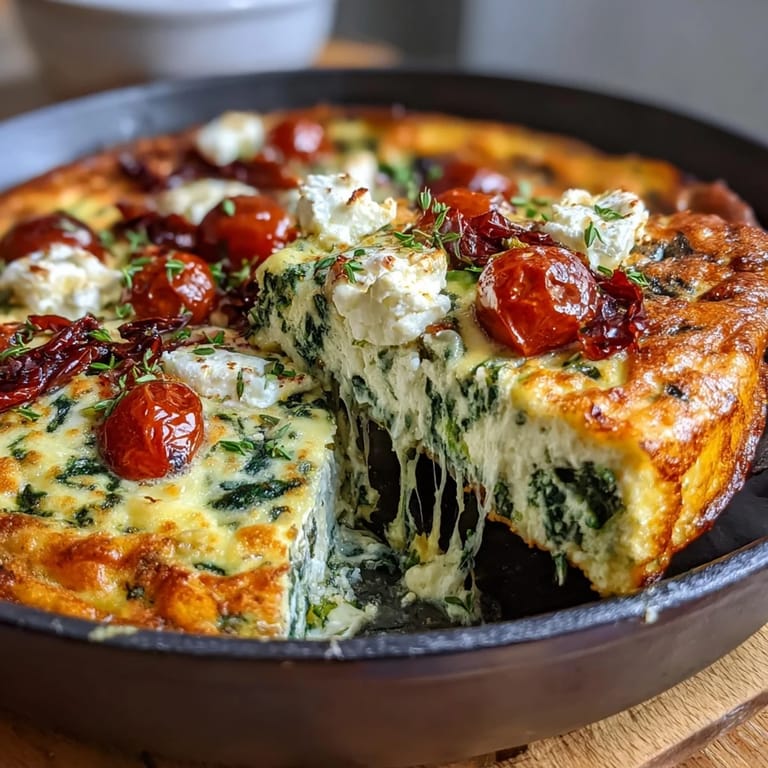
 This frittata has become the dish I reach for when I want to feel grounded in my kitchen, when I want to cook something that feeds people but doesn't demand my attention for hours. It's simple enough that you won't stress, but special enough that everyone at the table notices.
Frequently Asked Questions
- → Can I use frozen spinach instead of fresh?
Yes, thawed and well-drained frozen spinach works well as a substitute without compromising texture or flavor.
- → How do sun-dried tomatoes affect the dish?
They add a sweet-tart depth, balancing the creaminess of feta and richness of eggs for a vibrant flavor profile.
- → What is the best cooking vessel for this dish?
An ovenproof skillet, ideally 10-inch, allows for easy stovetop and oven cooking, ensuring even heat distribution.
- → Can I make this dairy-free?
Use plant-based feta alternatives and omit Parmesan to create a dairy-free variation that maintains the savory character.
- → What sides complement this dish?
A simple green salad or crusty bread enhances the meal, adding fresh or crunchy elements alongside the soft frittata.