 Pin it
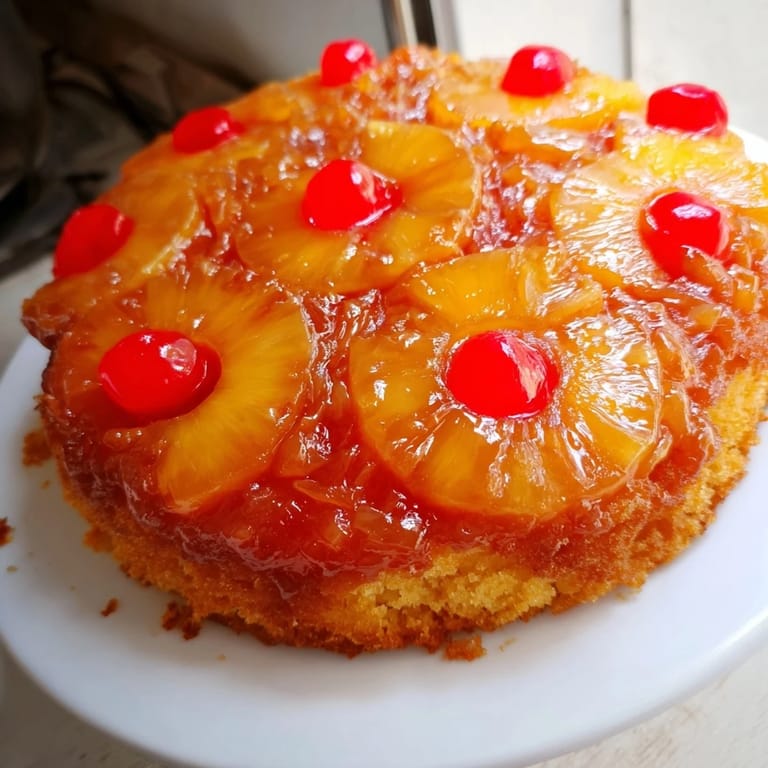
 There's something about the smell of butter and brown sugar hitting a hot pan that stops you mid-thought. The first time I made this cake, I stood in my kitchen watching that amber caramel pool at the bottom of the pan, and I couldn't shake the feeling that I was about to do something right. The pineapple rings arranged like little golden sails, those bright cherries nestled in their centers—it all looked too pretty to cover with batter. But then it baked, and when I flipped it onto the plate, the whole room seemed to gasp a little. That moment of anticipation before the pan comes away has stayed with me.
I baked this for my neighbor during one of those stretched-out summer afternoons when everyone's just trying to find reasons to sit on the porch. She'd mentioned craving something sweet but not too heavy, and I thought about this cake—how it sits between homey and special, never too much. When I carried it over still warm, she took one bite and closed her eyes, and suddenly we were talking about her grandmother's kitchen in Alabama. That's when I knew it was the kind of recipe worth keeping close.
Ingredients
- Unsalted butter (for topping): This is your foundation for caramel, so don't skip the melting step—it needs those few extra minutes to turn rich and golden.
- Light brown sugar: The packed measurement matters here; it creates that sticky, glossy layer that clings to every pineapple ring and becomes almost caramelized after baking.
- Canned pineapple rings: Fresh pineapple releases too much juice and can make the topping soggy, so drain the canned ones well and pat them dry on paper towels.
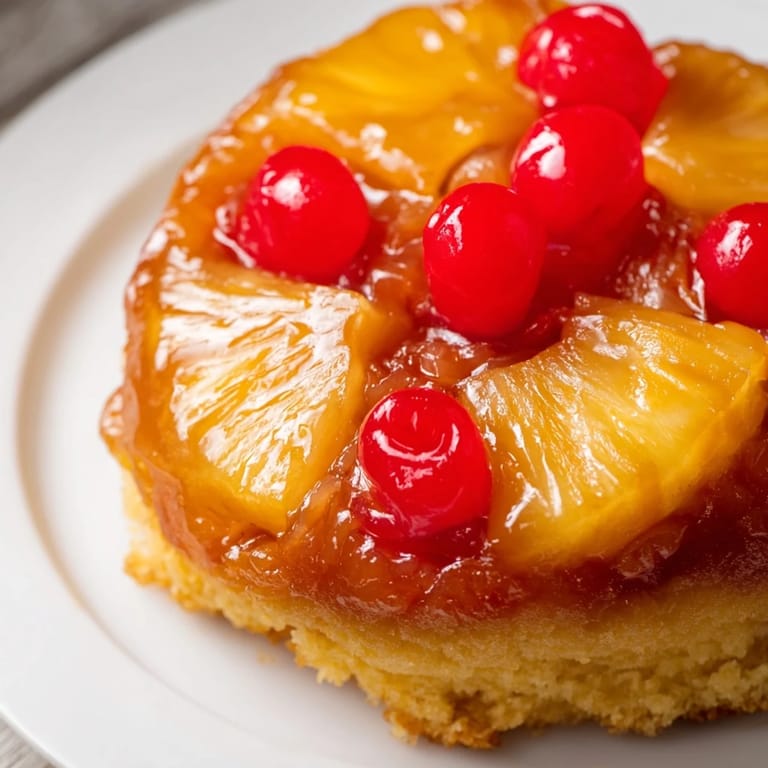
- Maraschino cherries: A small luxury that turns this from rustic to charming, and their sweetness complements the slight tartness of the pineapple beautifully.
- Unsalted butter (for cake): Softened is non-negotiable—it aerates the batter and gives you that tender crumb that feels delicate on your tongue.
- Granulated sugar: This lightens and lifts the batter, creating that fluffy texture that contrasts perfectly with the sticky topping.
- Eggs: Add them one at a time so they fully incorporate and don't make the batter split or break.
- Vanilla extract: A small amount goes far here; it hums quietly beneath the caramel and fruit notes.
- All-purpose flour: Measured correctly (spoon into the cup, don't scoop) prevents a dense or tough cake.
- Baking powder: This is your lift, your lightness, your promise of an airy crumb.
- Salt: Never skip it—salt amplifies sweetness and rounds out all the flavors.
- Whole milk: Room temperature if you can manage it; it blends more seamlessly into the batter without shocking the temperature.
Tired of Takeout? 🥡
Get 10 meals you can make faster than delivery arrives. Seriously.
One email. No spam. Unsubscribe anytime.
Instructions
- Heat the oven and prepare the pan:
- Set your oven to 175°C (350°F) and grease that cake pan generously, making sure the corners and sides are coated so the cake releases smoothly later.
- Create the caramel base:
- Melt the butter in a small pot, then pour it evenly into the bottom of the pan. The butter and brown sugar will marry together as the cake bakes, creating that gorgeous caramelized crust.
- Arrange the topping:
- Lay those pineapple rings in a pattern you like—it doesn't have to be perfect, and that's the beauty of it. Nestle a cherry into the center of each ring so it stays put during baking.
- Cream butter and sugar:
- Beat the softened butter and granulated sugar together for a few minutes until the mixture is pale and fluffy, almost mousse-like. This incorporates air and sets you up for a tender cake.
- Add eggs and vanilla:
- Crack in the first egg, let it fully incorporate, then add the second. Pour in the vanilla and mix until everything is one smooth, glossy batter.
- Combine dry ingredients:
- In a separate bowl, whisk together the flour, baking powder, and salt so the leavening distributes evenly throughout the cake.
- Alternate wet and dry:
- Add one-third of the flour mixture to the batter, stir gently, then add half the milk, then another third of flour, the remaining milk, and finally the last of the flour. Stop stirring once everything just comes together—overmixing leads to a tough, dense cake.
- Layer the batter:
- Spoon the batter carefully over the pineapple rings and smooth the top with a spatula, working gently so you don't disturb the fruit underneath.
- Bake:
- Slide the pan into the oven for 38 to 42 minutes, until a toothpick inserted into the center comes out clean or with just a few moist crumbs. The edges should pull slightly away from the pan.
- Cool and unmold:
- Let the cake rest in the pan for exactly 10 minutes—this is crucial because it firms up enough to hold its shape but is still warm enough to release cleanly. Run a thin knife around the edges to loosen it, place your serving plate on top, and flip with confidence.
 Pin it
 Years ago, I brought this cake to a potluck where the table was loaded with fancy desserts in jars and parfaits that looked like they belonged in a magazine. Mine looked like it came from my grandmother's kitchen, nothing trendy or complicated. By the end of the night, there was nothing left on my plate but crumbs and a few sticky rings of caramel, while the fancier things sat mostly untouched. That taught me something about the power of honest food.
Why This Cake Still Works
There's a reason this cake has been around for decades—it sits at that perfect intersection of simple and stunning. You're not wrestling with temperamental soufflés or trying to execute ten different techniques. It's just butter, sugar, eggs, flour, and fruit arranged in a way that looks like you spent hours on it. The caramel does most of the work, turning ordinary ingredients into something that feels ceremonial.
The Secret of Getting It Just Right
I used to think the hardest part was flipping the cake, but it's actually in the batter itself. The magic happens when you fold the flour and milk together with just enough care to keep the air bubbles alive but not so much that you overdevelop the gluten. It's a gentle rhythm: flour, milk, flour, milk, flour. Your arm gets tired, but that's the point—you're building something light by hand, not by assault.
Serving and Sharing This Cake
This cake is best served warm or at room temperature, when the caramel is still glossy but has set enough to hold its shape. A dollop of whipped cream or a scoop of vanilla ice cream isn't just nice—it's the conversation starter. For a different route, try scattered toasted pecans instead of cherries, or brush the batter with a tablespoon or two of pineapple juice from the can for an extra whisper of tropical flavor. Whatever direction you take it, remember that this cake is forgiving and wants you to succeed.
- If fresh pineapple calls to you, use thick rings and pat them extra dry to prevent weeping.
- Room-temperature ingredients mix more easily and create a smoother, silkier batter.
- The cake keeps well wrapped for two days, and tastes just as good reheated gently in a low oven.
 Pin it
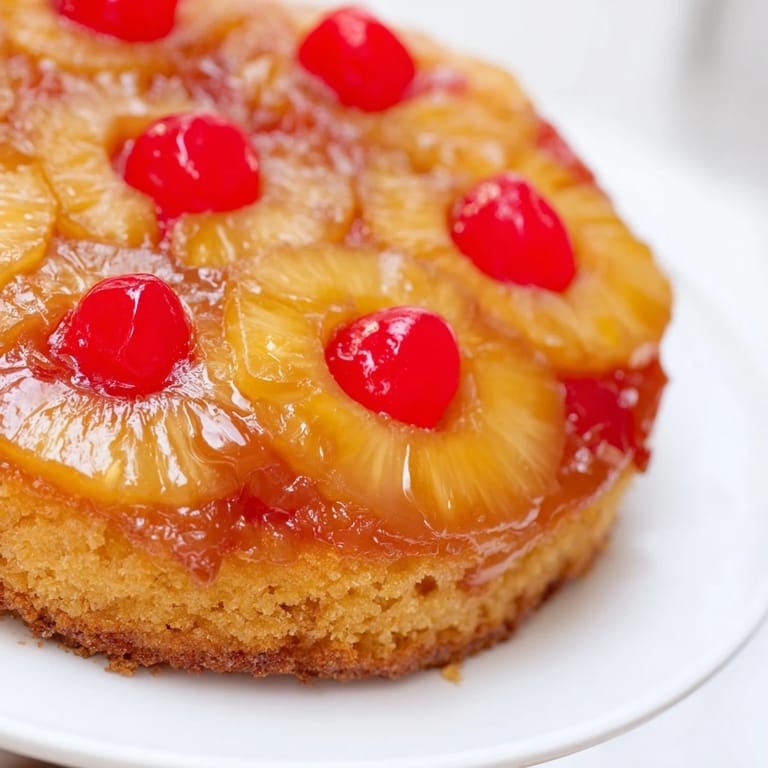
 This cake reminds me every time I make it that sometimes the most elegant thing you can do is flip something upside down and see what emerges. Bake one soon, and let the smell of caramel and vanilla fill your kitchen.
Frequently Asked Questions
- → How do I prevent the topping from sticking to the pan?
Grease the pan thoroughly before adding butter and sugar for the topping. This helps the caramelized fruit release easily when inverted.
- → Can fresh pineapple be used instead of canned?
Yes, fresh pineapple slices work well; just ensure they're drained or patted dry to avoid excess moisture affecting texture.
- → What is the best way to know when the cake is done?
Insert a toothpick into the center; if it comes out clean or with a few moist crumbs, the cake is ready.
- → Can I add pineapple juice to the batter?
Adding 1–2 tablespoons of pineapple juice can enhance the tropical flavor and keep the cake moist.
- → What are good serving options with this dessert?
Serve warm or at room temperature, optionally accompanied by whipped cream or vanilla ice cream for extra richness.